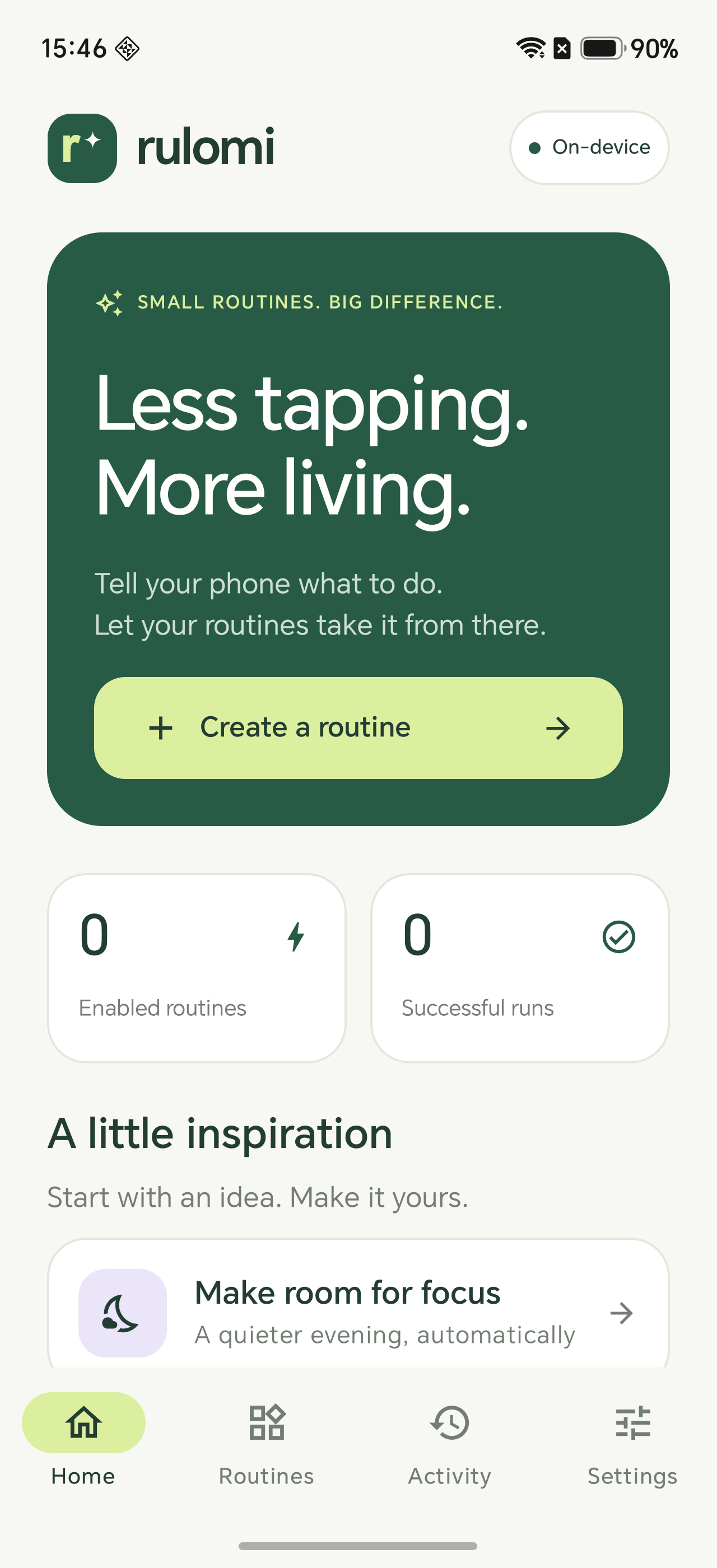
Write one sentence. Get a working Android routine.
Rulomi parses a written instruction into a typed trigger and up to eight sequential actions, shows you exactly what it understood, then executes on real Android APIs — AlarmManager for schedules and a foreground monitor for charging and battery events. No account, no API key, no backend, and no internet permission in the manifest.
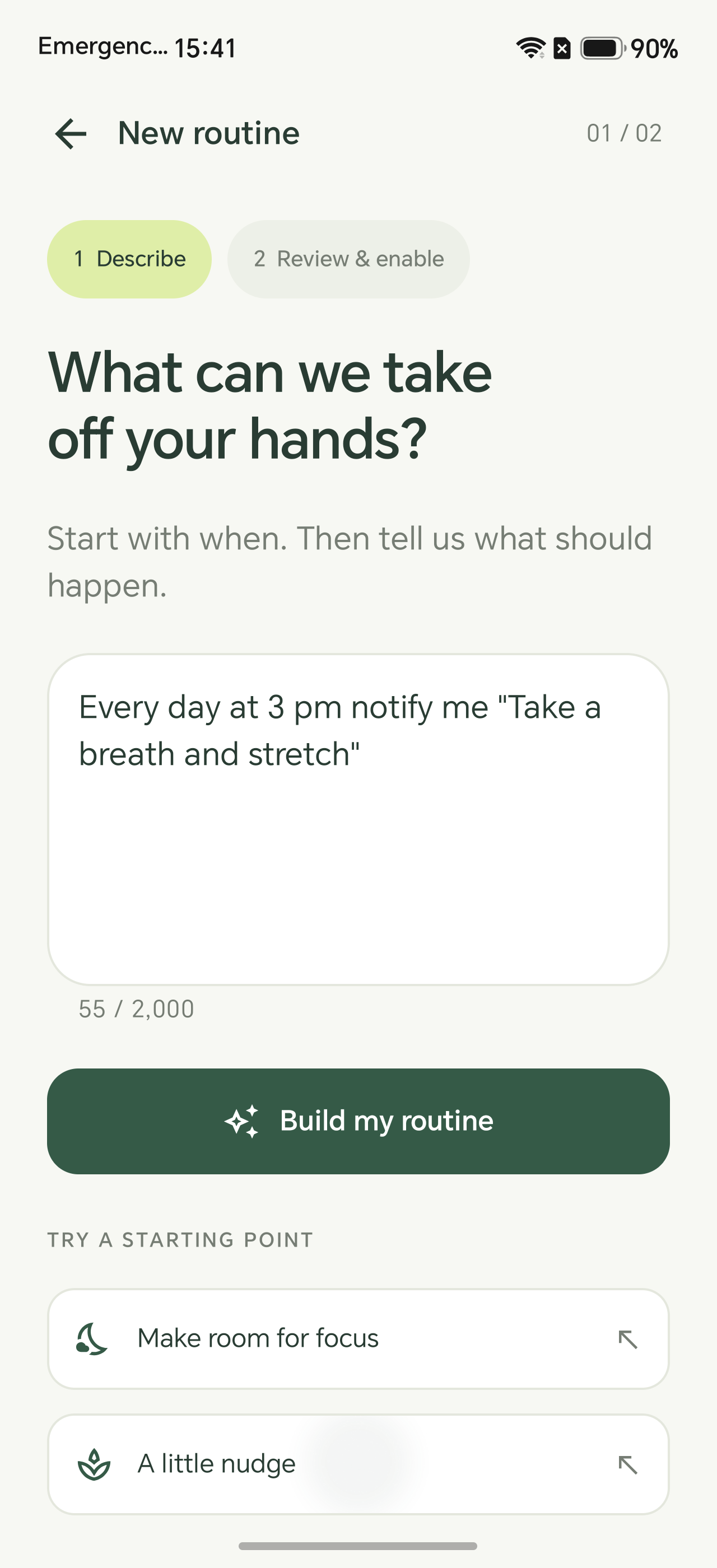
Use an explicit am/pm time or HH:mm. Separate actions with and, and then, then, or a semicolon. Conjunctions inside quoted notification text are preserved. Percentages must be in range.
Describe, review, enable — nothing runs before you approve it
Every required permission is checked before any action executes. An instruction that is only partly understood produces an explanation and cannot be enabled.
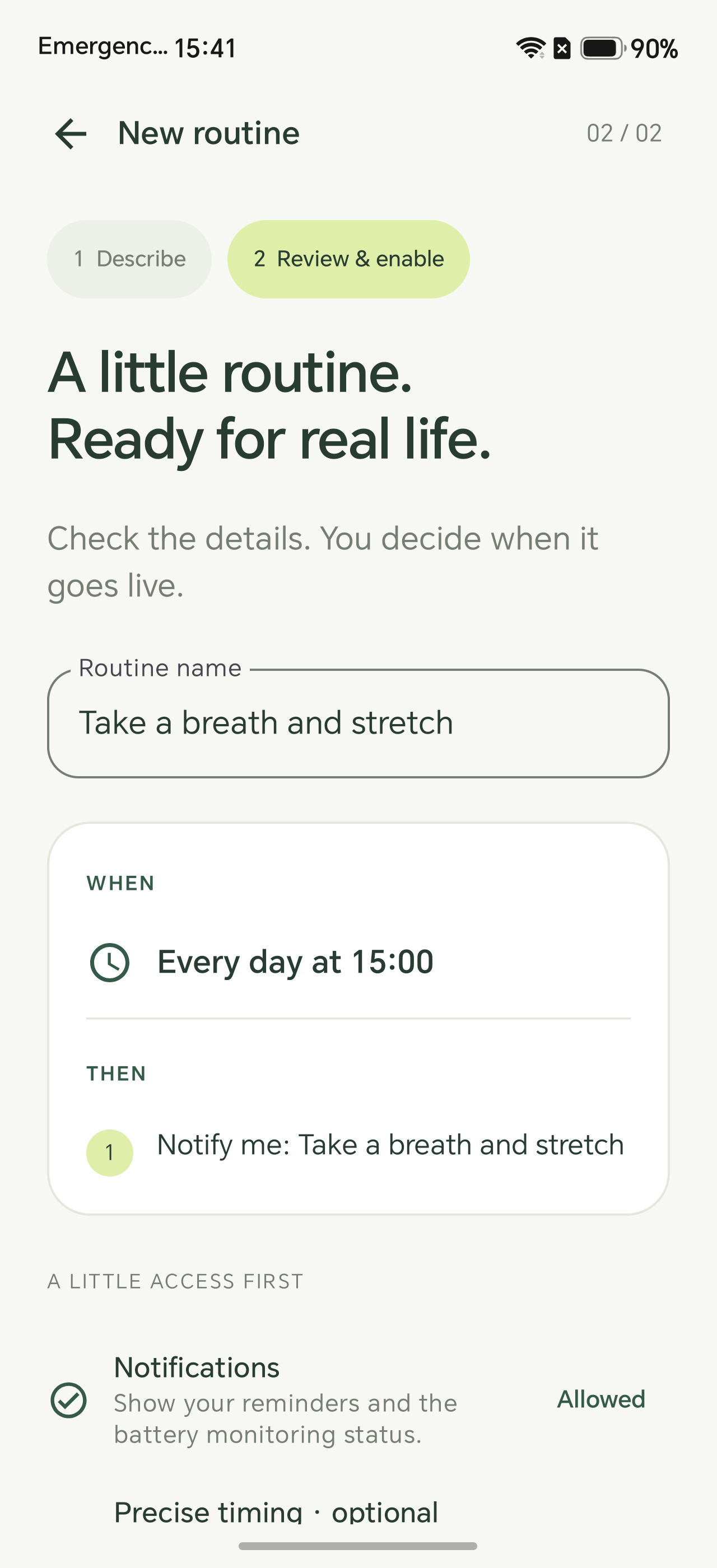
WHEN and the numbered THEN list, rename the routine, grant the specific access Android requires — or save it paused.Six triggers, four action types, eight actions per routine
Unsupported conditions are rejected outright, including extra conditions appended to an otherwise recognised instruction. This is not Tasker or MacroDroid parity.
The manifest does not request internet access
Not a policy promise — a build property. There is no backend to send prompts to, no account to create, and no provider key to supply. The planner is a parser compiled into the APK. Read the full privacy policy.
What the platform actually guarantees, and what it doesn't
Rulomi does not promise uninterrupted execution on every device. These are the real constraints.
Two ways in
SHA256SUMS.txt before installing.SHA256SUMS.txt · 17.1 MB
ANDROID_HOME or an untracked local.properties.Questions worth answering before you install
Automation model keeps planning separate from execution, so a future AI planner could produce the same object — but it would still have to pass the same validation and review flow.